
Rethinking the food pyramid
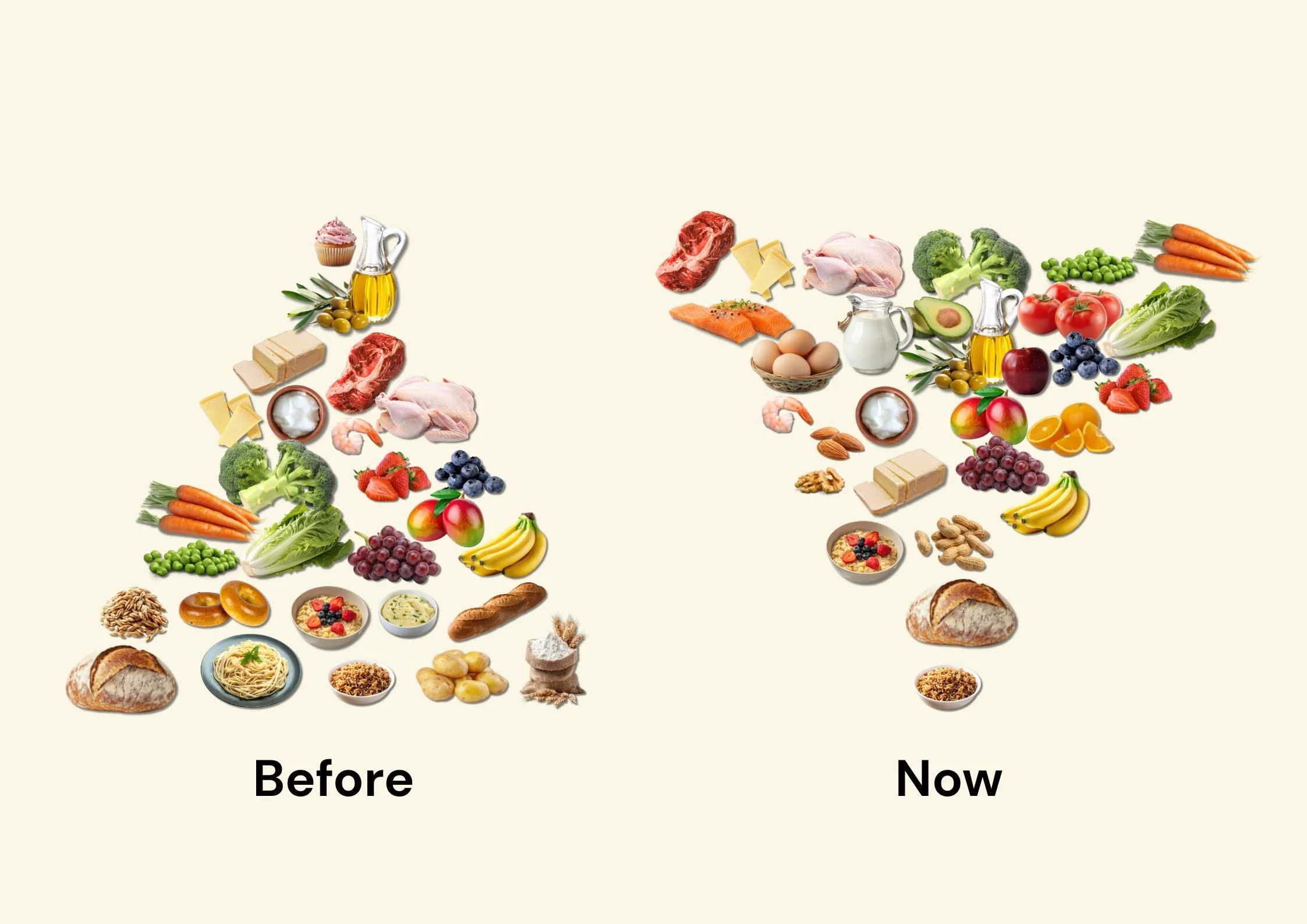
The Food Pyramid Comes Full Circle
For generations, farm families didn’t need a food pyramid to tell them how to eat. They ate what they raised, grew, hunted, or traded for: meat, milk, vegetables, fruit, and natural fats. Food was whole. Ingredients were recognizable. Nothing came from a factory, and nothing needed a warning label.
Then, over the past several decades, that common-sense way of eating was slowly replaced. Grains and refined carbohydrates were promoted as the foundation of every meal. Traditional fats were discouraged. Animal protein was pushed to the side. Highly processed foods and seed oils quietly became everyday staples.
And health, as many of us have experienced, didn’t improve.
Why This Major Shift Matters
That’s why the recent update to the government’s food pyramid is such a big deal.
For the first time in a long time, official dietary guidance is moving back toward what farmers and families have known for centuries: real food matters. In the updated model, meat, dairy, vegetables, fruits, and healthy fats are emphasized, while refined grains and ultra-processed foods are no longer treated as the foundation of a healthy diet.
This isn’t a small tweak. It’s a course correction.
It signals a growing recognition that whole foods – raised well and prepared simply – support stronger bodies, steadier energy, and better long-term health than processed substitutes ever could.
To learn more about the new food pyramid the government put out, learn more on their official website here.
How This Reflects the Way Our Ancestors Ate
Long before food labels and marketing claims, meals were built around:
Meat raised close to home
Milk, butter, and animal fats
Vegetables pulled from the ground
Fruit eaten in season
Nothing refined, engineered, or extracted
This new food pyramid doesn’t invent something new – it returns to something old.
At Hedgeapple Farm, this way of eating isn’t theoretical. It’s practical. It’s daily life. Our beef and pork are raised with the understanding that animals, land, and people are deeply connected. When animals are raised well, the food they provide nourishes more than just hunger.
Shop our farm-fresh products here.
Why Farm-Fresh Foods Matter: From Meat to Produce
This renewed focus on whole foods also highlights something farmers have always known: where your food comes from matters.
Farm-fresh foods – whether animal protein or fruits and vegetables – are fundamentally different from what’s traveled thousands of miles and sat on a shelf for weeks. Locally raised meat and locally grown produce are harvested closer to peak nutrition, handled with care, and produced with a direct connection to the land.
When you buy from local farms or farmers markets, you’re not just getting better food – you’re supporting soil health, water quality, animal welfare, and the families who steward that land every day.
Why Animal Protein and Traditional Fats Belong Back on the Plate
Beef and pork are not trends. They are foundational foods that have sustained working families for generations: often purchased in bulk, shared among families, and used across many meals. That’s why buying beef and pork in bulk still makes sense today.
At Hedgeapple Farm, our bulk beef and pork are raised with that same long-term nourishment in mind. Rich in protein, iron, zinc, and essential vitamins, these cuts help build strength, support immune health, and keep people satisfied after a meal – something highly processed foods struggle to do.
👉 Shop Bulk Beef
👉 Shop Bulk Pork
Traditional fats, the kind that naturally come with well-raised meat, were never the enemy. The fats found in our pasture-raised beef and thoughtfully raised pork carry flavor, nourishment, and steady energy, just as they did for people who worked with their hands and lived close to the land.
This renewed emphasis on animal protein and whole fats aligns not just with modern research, but with lived experience and with the way families have stocked their freezers for generations.
Change Happens Slowly, But It Matters
Will this new food pyramid change everything overnight? No.
But change like this never does.
Little by little, it shapes school lunches, healthcare advice, family habits, and grocery store shelves. It gives people permission to question what they’ve been told and to return to food that feels grounding and familiar. Over time, it has the power to improve lives – not through restriction or fear, but through nourishment.
Coming Back to Real Food
Health doesn’t come from chasing trends. It comes from eating food you recognize, trust, and understand.
We’re grateful to see national guidance beginning to reflect what farmers have long known: when you start with whole foods – from pasture-raised meat to farm-grown fruits and vegetables – you build something lasting for your body, your family, and the land.
That’s the kind of food pyramid we believe in.